
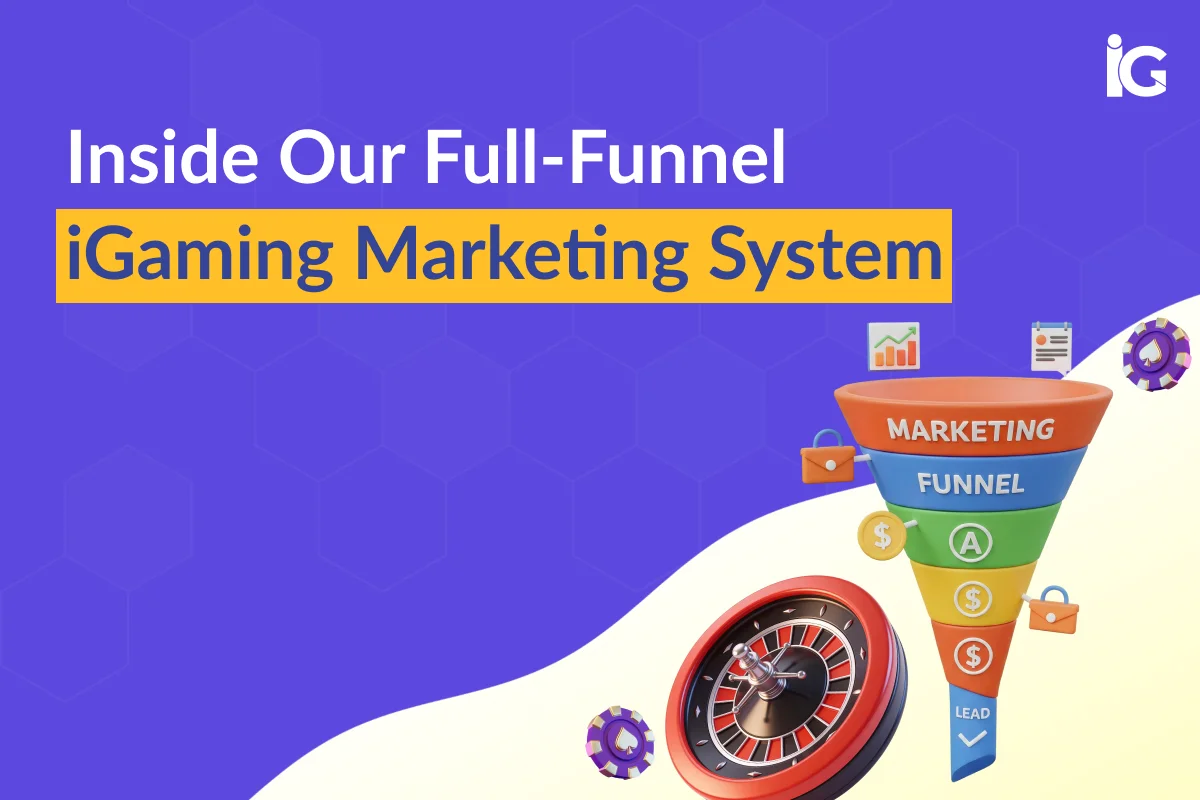
Inside Our Full-Funnel iGaming Marketing System
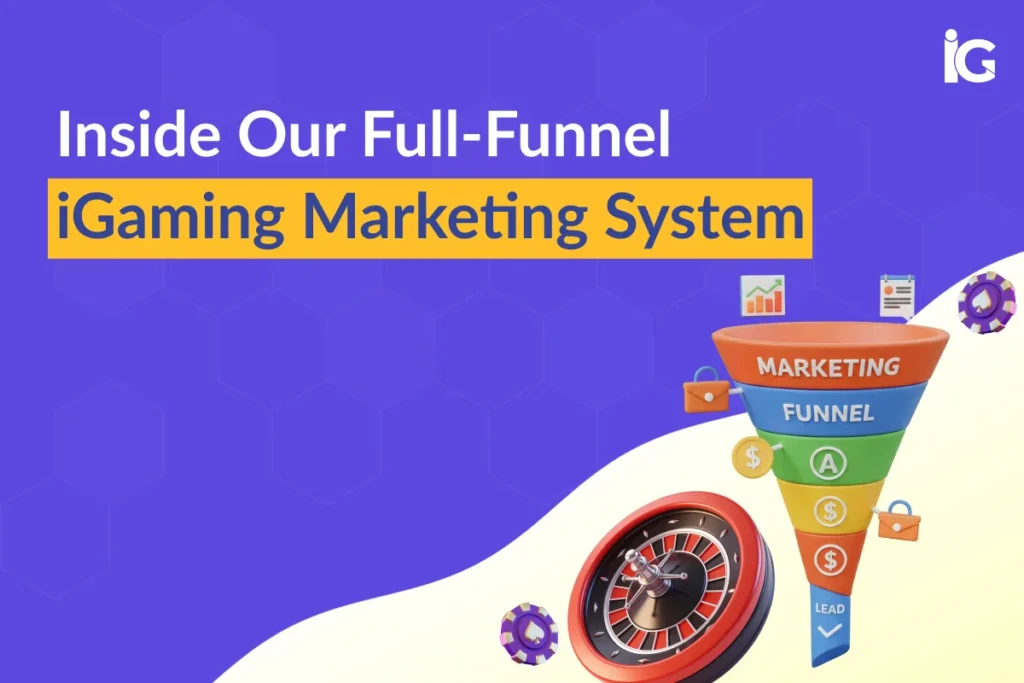
Most iGaming brands don’t have a marketing problem. They have a funnel problem.
They run paid campaigns that bring traffic to pages that don’t convert. They publish SEO content that ranks but never turns readers into registrations. They spend heavily on acquisition while first-time depositors quietly churn out the back door. Every channel looks busy. The P&L tells a different story.
After seven years and 50+ iGaming clients, including operators, platforms, and affiliates, we’ve stopped treating channels as separate services. What actually moves revenue is a connected system where acquisition, conversion, and retention feed each other. This is how that system works.
Why single-channel marketing fails in iGaming
iGaming is one of the most expensive acquisition environments in digital marketing. CPCs in Tier-1 markets are brutal, ad platforms restrict gambling advertisers by default, and regulators dictate what you can say and to whom. On top of that, the product itself has a leaky bucket: a large share of players deposit once and never return.
In that environment, a channel working in isolation is almost guaranteed to lose money. Paid search can deliver high-intent clicks all day, but if the landing experience is slow or the registration flow asks for too much too early, you’re paying premium CPCs to fund abandonment. SEO can build a steady stream of organic traffic, but without conversion-focused page architecture, it’s traffic for its own sake. And even when acquisition works, weak retention means your true cost per profitable player is often two or three times what your dashboard says.
The math only works when the whole funnel is engineered together. So that’s how we build.
Stage 1: Acquisition. Qualified traffic, not just traffic
At the top of the funnel, our job is to put the brand in front of people who are actually likely to play, in markets where the brand is licensed to operate.
Paid media is usually the fastest lever. The iGaming-specific challenge isn’t writing good ads. It’s getting them live and keeping them live. That means whitelisted ad accounts, certification where platforms require it, geo-targeting that respects licensing boundaries, and creative that passes policy review without losing its edge. Around 82% of clicks on iGaming search ads come from high-intent users, which makes paid search one of the strongest acquisition channels in the vertical, but only when campaigns are structured for compliance from day one instead of retrofitted after a suspension. Our paid marketing team builds campaigns to survive, not just to launch.
SEO is the compounding layer underneath. Roughly 68% of iGaming journeys start with a search, and unlike paid, organic visibility doesn’t disappear the moment budgets pause. But gambling is YMYL territory, and Google holds it to the highest trust standards, so our iGaming SEO work goes beyond keywords: topical authority architecture, E-E-A-T signals, technical health, clean link profiles, and content depth that earns rankings that survive core updates. Increasingly, we also optimize for AI search surfaces, because a growing share of players now discover brands through LLM-generated answers rather than blue links.
Social rounds out the top of the funnel as the trust and awareness engine. Over 70% of engagement in iGaming begins on social platforms, and it’s where a brand stops being a logo and starts being a personality. Our social media marketing team handles the parts that trip most operators up: multilingual and geo-targeted content, platform-specific compliance, and creative that improves ad approval rates rather than fighting them.
The key discipline at this stage is that all three channels share one target: qualified users in licensed markets. Not impressions. Not clicks. Players.
Stage 2: Conversion. Where most funnels quietly bleed
This is the stage most iGaming brands underinvest in, and it’s where we typically find the fastest wins.
A player who clicks an ad or a search result has already shown intent. What happens in the next 30 seconds decides whether that intent becomes a registration or a bounce. Page speed matters enormously here. Every extra second of load time costs conversions, and iGaming pages are notoriously heavy with game assets, live odds, and tracking scripts. Registration friction matters just as much: forms that demand everything upfront, unclear bonus terms, or a mobile experience that clearly wasn’t designed mobile-first.
Two of our service lines exist specifically to fix this stage. Website management keeps the platform fast, secure, compliant, and always current, with promotional banners scheduled and rotated on time, expired offers pulled before they mislead anyone, and analytics and integrations feeding clean data back into the funnel. And UI/UX design rebuilds the journey itself: conversion-driven flows, data-informed layouts, and cross-platform responsiveness built around how players actually behave, not how a design template assumed they would.
The results compound with everything upstream. When we improve a landing experience, every acquisition channel gets cheaper at once. The same media spend suddenly produces more first-time depositors. That’s the whole point of full-funnel thinking: a conversion fix is also a paid media fix and an SEO fix.
Stage 3: Retention. Where the real margin lives
Acquisition gets the attention. Retention pays the bills.
In iGaming, the difference between a profitable brand and a struggling one is rarely the volume of new registrations. It’s what happens after the first deposit. A player retained for months is worth multiples of their acquisition cost. A player who churns after one session turns your CPA into a sunk cost.
Our retention work spans the levers that keep players engaged and lifetime value climbing: CRM flows timed around player behavior, reactivation campaigns for lapsed segments, content and social presence that give players a reason to stay connected to the brand between sessions, and loyalty mechanics that reward the behavior you actually want. Just as importantly, retention in iGaming has to be built compliance-first. Responsible gambling isn’t a box to tick. It’s a trust signal that regulators, platforms, and players all read.
Retention data also flows back to the top of the funnel. Once we know which acquisition sources produce players who actually stay, we shift budget toward them and away from sources that produce one-and-done depositors. Most agencies optimize toward cost per registration. We optimize toward cost per retained player, because that’s the number that correlates with revenue.
The connective tissue: data, compliance, and one team
Three things hold the system together.
Shared data. Every stage reports into the same measurement framework, so we can trace a retained player back to the campaign, keyword, or creative that acquired them. That’s what makes budget decisions honest. The funnel tells us where the money should go, not channel-level vanity metrics.
Compliance as a foundation, not a filter. Licensing rules, ad platform policies, and market-specific regulation are built into strategy from the first brief. It’s the difference between campaigns that scale and accounts that get suspended mid-flight.
One team across the funnel. When the people running your ads sit next to the people designing your landing pages and the people managing your retention flows, problems get solved in days instead of quarterly reviews. That’s the operating model behind the $80M+ in revenue we’ve driven for clients. Not a secret channel tactic, just a system where nothing works in isolation.
What this looks like for your brand
If your acquisition costs keep climbing while retention stays flat, the answer usually isn’t more budget. It’s a funnel that stops leaking. The fastest way to find out where yours is leaking is to look at the whole thing at once.
That’s exactly what our free marketing audit does: a 30-minute strategy call, an in-depth review of your acquisition, conversion, and retention performance, and a clear growth roadmap you can act on whether or not you work with us.
Get your free audit and see your full funnel the way we see it.
Frequently Asked Questions
What is full-funnel iGaming marketing?
Full-funnel iGaming marketing means managing acquisition, conversion, and retention as one connected system instead of separate channels. Paid media, SEO, and social bring qualified players in, website performance and UX turn them into registrations and deposits, and CRM and retention work keep them playing. Each stage feeds data back to the others, which is what makes the whole funnel profitable rather than just busy.
Which marketing channels work best for iGaming brands?
Paid search and SEO are typically the strongest acquisition channels because they capture players with existing intent. Around 82% of clicks on iGaming search ads come from high-intent users, and roughly 68% of iGaming journeys start with a search. Social media adds the trust and awareness layer, with over 70% of engagement in iGaming beginning on social platforms. The right mix depends on your market, license, and margins, which is why we build the channel strategy around your funnel data rather than a fixed template.
How long does it take to see results from iGaming marketing?
Paid campaigns can start producing registrations within the first few weeks once accounts are whitelisted and compliant. Conversion improvements from UX and site speed fixes usually show up in the numbers within the first month. SEO is a longer play: meaningful organic growth in a competitive iGaming market typically takes three to six months, then compounds from there. Retention gains build over each player cohort.
How do you deal with gambling ad restrictions on Google and Meta?
We work with whitelisted ad accounts, platform certification where required, and campaign setups that are compliant from day one, including geo-targeting matched to your licensing. That’s the difference between campaigns that scale and accounts that get suspended mid-flight. As certified partners across Google, Meta, and TikTok, we build for approval rather than trying to slip past review.
Why does retention matter so much in iGaming?
Because acquisition in this industry is expensive and a large share of players deposit once and never return. A retained player is worth multiples of their acquisition cost, while a one-and-done depositor turns your CPA into a sunk cost. Optimizing for cost per retained player, not cost per registration, is what separates profitable growth from vanity metrics.
Do you work with operators, affiliates, and B2B iGaming suppliers?
Yes. We’ve partnered with 50+ brands across the industry, including casino and sportsbook operators, platform providers, and affiliates, in both B2C and B2B markets. The funnel framework is the same, but the targets change: player acquisition and LTV for operators, lead quality and partnerships for B2B and affiliate businesses.
